
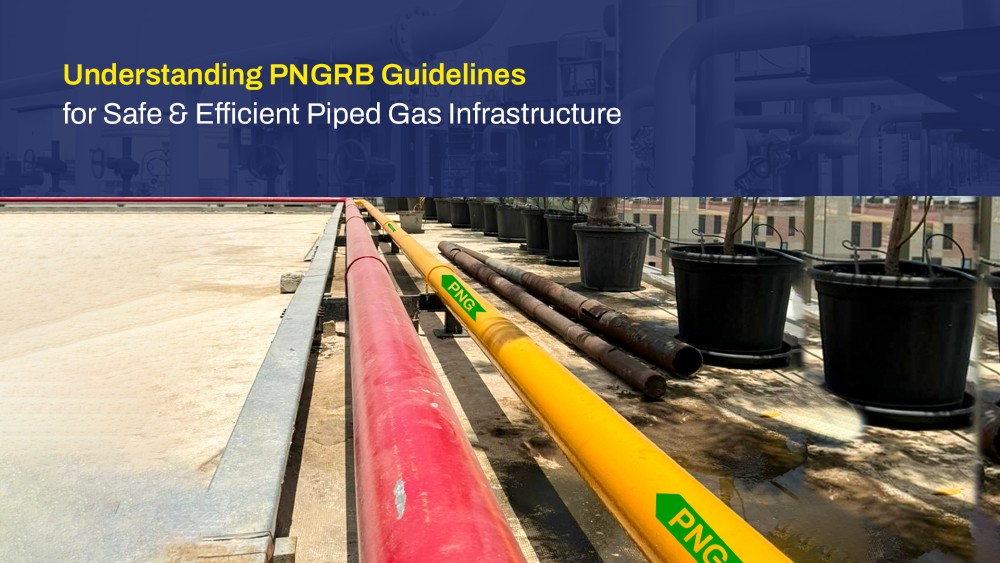
Understanding PNGRB Guidelines for Safe & Efficient Gas Infrastructure
India’s natural gas infrastructure is expanding rapidly, with Piped Natural Gas (PNG) becoming increasingly common across industries, commercial kitchens, hotels, hospitals, institutions, and manufacturing facilities.
As businesses shift towards piped gas systems for uninterrupted fuel supply and operational convenience, compliance with Petroleum and Natural Gas Regulatory Board (PNGRB) guidelines is becoming increasingly important for ensuring safety, operational reliability, and infrastructure integrity.
PNGRB, established under the PNGRB Act, 2006, regulates City Gas Distribution (CGD) Networks and Natural Gas Pipeline infrastructure across India. Its Technical Standards & Specifications including Safety Standards (T4S Regulations) define the minimum requirements for design, operation, maintenance, and safety of piped gas systems.
Why PNG Compliance Matters
Piped gas systems operate continuously under pressure, making infrastructure quality and preventive safety systems critical.
Improper pipeline sizing, inadequate pressure regulation, corrosion, weak joint integrity, or insufficient leak monitoring can significantly increase operational and safety risks.
PNGRB Guidelines therefore emphasize:
- Approved Piping Materials
- Pressure Regulation Systems
- Corrosion Protection Measures
- Leak Detection Protocols
- Emergency Isolation Systems
- Technical Audits & Inspections
- Ventilation & Safe Routing Practices
For commercial and industrial facilities, these factors directly impact operational continuity and fuel efficiency.
Infrastructure Design & Operational Efficiency
One of the most overlooked aspects of PNG compliance is infrastructure design itself.
Many operational inefficiencies arise not because of fuel shortages, but due to under optimized gas systems. Improper pressure balancing, incorrect pipeline sizing, and inadequate safety systems can affect burner efficiency and increase operational risks.
Commercial piped gas systems commonly operate around 21 mbar pressure, approximately 210 mm Water Column, to maintain stable burner performance and efficient combustion.
Even minor pressure fluctuations can result in:
- Uneven Flame Distribution
- Incomplete Combustion
- Increased Gas Consumption
- Reduced Burner Efficiency
- Operational Downtime
PNGRB standards therefore emphasize controlled gas flow, pressure stability, and maintainable infrastructure for long term operational reliability.
Leak Detection & Pipeline Safety
Leak prevention remains one of the most critical components of compliant piped gas infrastructure.
Natural gas systems undergo routine inspections, technical audits, and pressure testing procedures to ensure System Integrity and Leak Tightness.
Industry safety practices commonly recommend pressure testing at 1.5 times the normal operating pressure before commissioning pipeline systems.
PNGRB compliance also focuses heavily on:
- Emergency Shut Off Valves
- Pressure Relief Systems
- Corrosion Monitoring
- Gas Leak Detection Systems
- Preventive Maintenance Programs
Since Natural Gas is highly combustible, early leak identification and isolation mechanisms play a major role in reducing fire hazards and operational disruptions.
India’s City Gas Distribution network continues to expand rapidly. According to PNGRB data, more than 300 Geographical Areas across India have now been authorized for CGD development, accelerating PNG adoption across residential, commercial, and industrial sectors.
For businesses, PNG offers:
- Uninterrupted Fuel Supply
- Reduced Cylinder Handling
- Better Energy Management
- Improved Operational Convenience
- Lower Operational Interruptions
However, as PNG adoption increases, ensuring compliant gas infrastructure becomes equally important.
Conclusion
PNGRB guidelines are not just regulatory requirements. They serve as a technical framework for building safe, efficient, and future ready piped gas infrastructure.
As India continues expanding its natural gas ecosystem, professionally designed and compliant piped gas systems will play an increasingly important role in ensuring Operational Continuity, Workplace Safety, and Long-Term Sustainability.